This is a free essay sample available for all students. If you are looking for pre written essays for sale on the topic “Is Google Making Us Stupid”, browse our private essay samples.
Introduction
These days, it’s rare to find a population that hasn’t been greatly influenced by the advent of Google. Indeed, since its conception, we’ve been products of day-to-day dependence on this search engine, and participants in its rapid progress.
But is Google making us slaves to the information it feeds us? In this sample essay, the author reviews Nicholas G. Carr’s article titled “Is Google Making Us Stupid?” and offers her take on this topic.
Need help writing an article review? Try our affordable essay writing services and get matched with a professional writer who can help you finish that requirement.
The Search Engine and the Human Brain: A Summary and Response Essay on Nicholas Carr’s “Is Google Making Us Stupid?”
Published in the July/August 2008 issue of The Atlantic, Nicholas Carr’s lengthy reflection piece titled “Is Google Making Us Stupid?” is a thought-provoking and sobering essay on how the biggest search engine in the world is rewiring the way we think and read.

He begins by recalling a key scene in Stanley Kubrick’s famous science fiction movie 2001: A Space Odyssey, where HAL, a supercomputer, begs astronaut Dave Brown to spare its life. HAL describes the sensation of losing its mind as Brown slowly takes its “brain” apart after malfunctioning and nearly costing the astronaut’s life.
Interestingly enough, Carr likens HAL’s experience to his own intelligence, remarking that because of his regular use of Google and the Internet, he observed small but gradual changes in the way he thinks and reads. He is no longer able to do deep reading in the traditional sense like he used to, and his attention span has greatly diminished. He talks about how Google has caused him to form online research habits that have transformed the way he used to process information.
He then brings the rest of today’s society into the equation, noting that it is not a one-off experience, but a collective one. As we have greatly benefited from the convenience and efficiency of Google search, our brains have taken a beating.
Carr explores the neurological effect of constant exposure to and use of Google. He mentions that because we have grown accustomed to a sped-up version of data downloading, we now skim through large chunks of information rather than take the time to digest it. He adds that other literary types from his circle have had the same experience.
While there still are no definitive long-term studies on how the Internet affects our brain, Carr mentions a study by scholars at the University College London, where it was discovered that people who read online typically skim content. They will maybe read through a couple of pages, then move to the next article. They may save long-form content for later, but it was never documented whether or not they actually returned to read it.
Carr believes that with the Internet now becoming a universal medium for uploading and downloading data, a new reading style has emerged. Because we continually get our information from new technology that comes with a faster processor, our brain tries to keep up with the rapid transfer of information, and we apply it even offline.
By way of proving his point, Carr shares a fascinating piece of trivia about the adult brain. Contrary to what we think, brain researchers have discovered that the grown-up mind is almost like plastic – nerve cells routinely break at the same time that it creates new ones, doing away with old connections and essentially making functional adjustments as it experiences or downloads information.
Carr then offers several more examples of how our brain’s wiring has evolved with the introduction of new forms of intellectual technologies. From the mechanical clock and the typewriter to the printing press and the stopwatch, we have adapted our processes and created precise instructions for the way we want to produce and work. Instead of going with our instinct and senses, we have decided to adjust ourselves to other technologies. Carr discusses how even traditional media is stepping up to adopt similar practices from Internet media such as shorter content, targeted ads, and the like.
Towards the end of his essay, Carr causes us to think deeply about the mission of Google, as it has been documented that the search engine one day aims to produce artificial intelligence. It wants to use information derived from its users in order to plug back in targeted information in them as if to program the way they think and behave. He invites us as human beings to think about how Google might be treating us as just an outdated computer that needs regular reprogramming.
My Response to Nicholas Carr’s Article
It wasn’t until reading this article by Nicholas Carr that I began to really think about my own online behavior. As much as I hate to admit it, he is correct in saying that while Google has made my life easier, it has made thinking harder. It now feels like I have been spoon-fed all the information that it thinks I want to get.
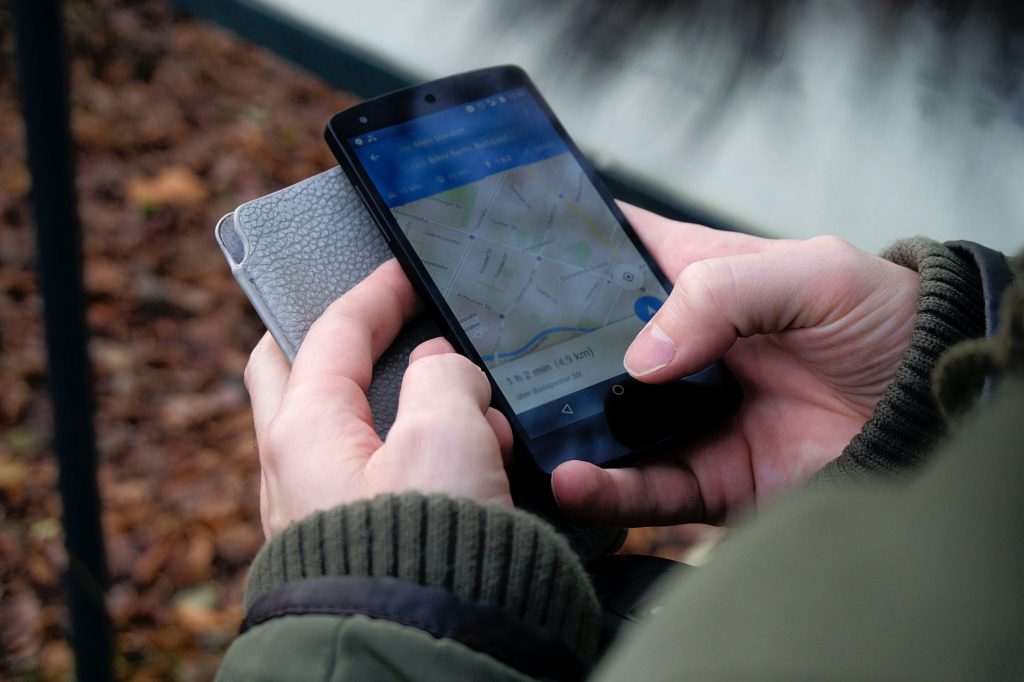
If I do a critical analysis of my Google and social media feeds these days, the first observation I will make is how the ads on my feed seem to be perfectly tailored to me. I have noticed that every time I click on an external link, the ads on my feed seem to all be related to that brand or that type of content.
I also agree that I now skim instead of wanting to read deeply. Reading online for me now consists of going for the article with the catchiest title, only to realize a few paragraphs in that it was all just clickbait. This then leads me to jump to the next result on the search. This cycle goes on and on until I feel mentally drained but not information-enriched. I think that for the most part, reading online has dampened my critical thinking skills. I no longer want the best, most compelling information. I just need the fastest data so that I can get moving.
Do I believe that Google is making us stupid? Maybe “stupid” is too strong a word. But I do believe that Google has made us impatient, shallow, and narrow-minded. We have become impatient because this data monster has amplified our need for instant gratification and efficiency. We have stopped enjoying the process of gaining new knowledge and percolating ideas out of them without getting distracted. We have become shallow because we have learned to settle for mediocre information and writing. And we have become narrow-minded because we have learned to embrace the information that has been decided for us.
I think we need to remember that we are smart people and that we have always been wired to survive and thrive without the speed of a search engine. Perhaps if we learned to look up once in a while, we might be inspired again. Until then, we will always have our faces stuck in our laptops and cell phones, unaware of the life happening around us.
Worst-case scenario, we might end up being the kind of population that Carr labels as “pancake people“: spread out too thinly with no concept of depth. I hope that we would rediscover what it is like to turn off the Internet, do a deep read, and enjoy the experience. We don’t need a bigger hard drive; we just need to learn to enjoy the pause.