This is a free essay sample available for all students. If you are looking for cheap essays for sale on the topic “Pros and Cons of Vaccines”, browse our private essay samples.
Introduction
When it comes to vaccination, you will find plenty of people on different and varying parts and ends of the spectrum. There are some who completely believe in them and will take any vaccine recommended by doctors. There are others who believe in total natural immunity and will not get vaccinated at all.
What are the pros and cons of vaccinations? The author of this sample essay weighs the different factors affecting a vaccination decision.
Overcoming Vaccine-Preventable Diseases: The Pros and Cons of the Jab
One of the most sensitive parenting topics is the issue of childhood vaccination. While most parents you will come across believe in the power of the jab, there are still a good number of parents who are skeptical about the increasing number of vaccinations that pediatricians will require of children year after year. They compare it to previous years when only the most basic jabs were mandated. For example, the yearly flu shot was only recommended in recent years, and they don’t understand the importance of always having the most updated jab for vaccine-preventable diseases.
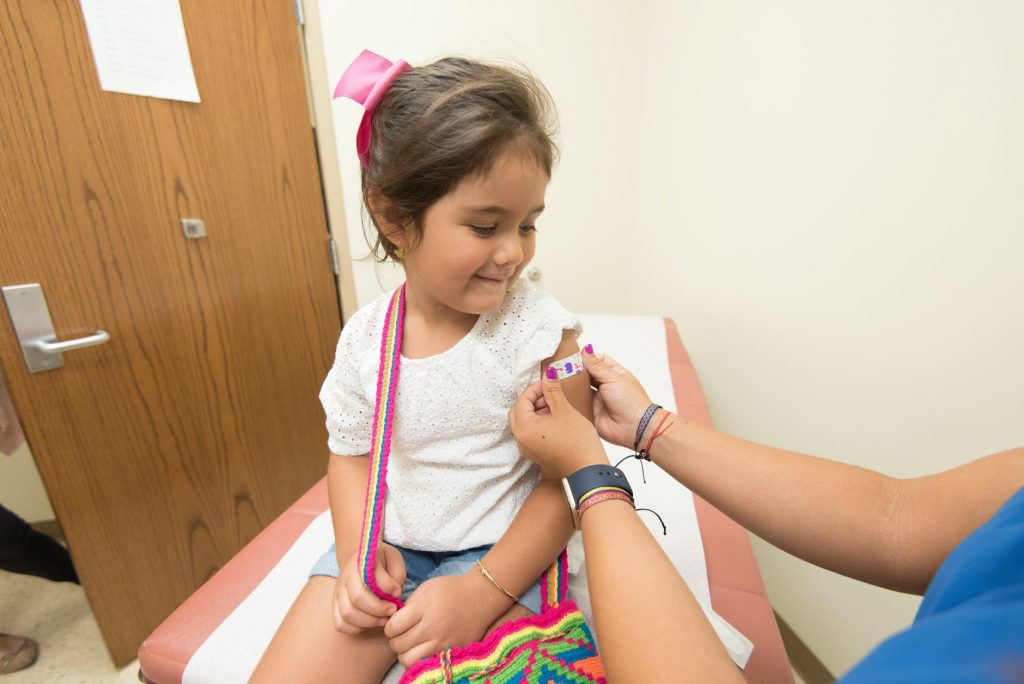
It is a similar issue to the rest of society. In this day and age, the division between those who are for and against vaccines is becoming more marked. Despite recommendations by the Center for Disease Control and the World Health Organization, there are still numerous people who believe that acquiring a natural infection is still the best way to achieve herd immunity and strengthen the immune system against reinfections.
While it is true that our immune systems are more powerful than we can ever imagine, vaccines carry with them a lot of benefits, especially in particular seasons where hospitals are already overwhelmed or there is a severe outbreak or pandemic. In this essay, I would like to explore the potential pros and cons of vaccines. I will dig deeper into its benefits and risks, and think about its implications on future generations.
What Are the Benefits of Getting Vaccinated?
Vaccines protect children from unnecessary hospitalizations or loss of life. Children make up a segment of society’s most vulnerable populations, especially those under the age of 2, as immune systems are still developing. Getting jabbed actually protects them from and lowers the risk of acquiring vaccine-preventable diseases, including whooping cough, MMR, polio, rotavirus, diphtheria, typhoid fever, and hepatitis A, among others.
As early as 8 weeks after their birth, newborns are scheduled to start their regular vaccinations, MMR vaccine, polio vaccines, DTAP vaccines, and the like. Expecting mothers even get vaccinated with the flu shot, as well as the DTAP jab, because it is believed that antibodies generated by the mother will be passed on to the fetus in utero.
Vaccines are safe to use on most of the population. Shots are carefully formulated, integrating the right amounts of every ingredient at the safest possible dosage. Some of the world’s topmost medical groups can vouch for their safety, such as the CDC, Food and Drug Administration (FDA), American Medical Association (AMA), World Health Organization (WHO), and UNICEF.
It is rare to experience the extreme side effects of a jab. Because they have been carefully formulated, vaccines are designed to minimize the most adverse reactions. The likelihood of experiencing a severe allergic reaction such as anaphylaxis is extremely low.
Taking the jab today protects children now and future generations. This is the reason why pregnant women sometimes retake or update their vaccinations during the period of their pregnancy under the supervision of their OB-GYN. Doing so is a way to provide their unborn children initial protection from several diseases so that they carry antibodies with them as they are born. In the same manner, an entire group or community that decides to get vaccinated reaches herd immunity faster and actually protects future generations as they eradicate diseases in their time.
Vaccinations have economic benefits for the society it protects. Because vaccines prevent illness and death to an extent, it saves society from costs associated with illnesses, early deaths, even disabilities. These are just some of the indirect effects a jab decision can make on a collective whole.
What Are the Potential Risks and Downsides Associated with the Jab?
Though rare, an adverse reaction from a shot can cost a life. There are already medical cases that describe children experiencing severe allergic reactions to a vaccine, which can be life-threatening. Although the number is really just one per million children, it is an incredibly big deal to the parents whose children are the ones who experience them.
Mandatory vaccinations step on personal medical choices. People who are largely for natural immunity (and, as such, are anti-jab), protest that forcing a shot on them tramples on their most basic freedom, one of which is religion. They believe that their bodies are their own, so even the choice of whether or not to avail of a jab should be purely theirs. They don’t accept that it is actually a societal and community decision.
Natural vaccination is still better than artificial immunity. While vaccines are extremely effective in preventing disease, the fact is that our immune systems are much better at generating the best antibodies targeted towards the particular strain of the disease that affected us. They also remember viruses better when they naturally generate antibodies for them.
There is plenty of reason to doubt the CDC, the FDA, and pharmaceutical companies. Those who are most skeptical about vaccines largely distrust the organizations and stakeholders in charge of developing them, as they are largely profit-oriented. There is always a possibility that experimental jabs can be released to the general public as a large experimental group in order to tweak formulas, which makes unsafety a possibility.
There is also a chance that they are selling unnecessary jabs just because they want to profit off paranoid people or extreme pro-vaccination groups who will just acquire the shot without doing a lot of thinking about it. Primarily seeing these organizations as profiteering businesses will steer people away from their products as they will just feel used for the sake of generating additional business.
Some ingredients of vaccines go against one’s faith or religion. There are some faiths that object to certain ingredients in vaccines, which they deem to be immorally acquired, such as chicken egg protein, cells gleaned from African green monkeys, pig gelatin, and insect cells. People who identify as vegan or vegetarian will also struggle with this fact. Another potentially problematic ingredient is human albumin, which is a blood plasma protein found in our own bodies.
Conclusion
The mixed reactions we get about the issue of vaccinations are understandable. We have, at one point, experienced both the benefits and risks of taking them. We have to understand that people who are largely anti-vaccination probably have had a personal experience relating to that conviction.
At the end of the day, I believe that getting jabbed is both a personal and community decision. Depending on the context, it is important for each of us to know why we have decided for or against this issue and do the necessary research to support our decision. We are bound to come across people who think differently from us, and that’s to be expected. We need to ensure that discussions remain respectful, with more listening being done than talking.
I think that the dilemma on whether or not to avail of a certain vaccine really boils down to personal risk analysis. Are you part of a vulnerable population? Do you have co-morbidities? Have you had a life-threatening allergic reaction to a shot before? What other shots have you already taken? What do you believe from a faith perspective? Asking yourself these questions prior to deciding to take a specific vaccination will help you arrive at an informed personal decision.
Dangerous diseases will always exist and emerge, and it is important for everyone to know how to take care of themselves. It is a free society, and we are caretakers of our own bodies.